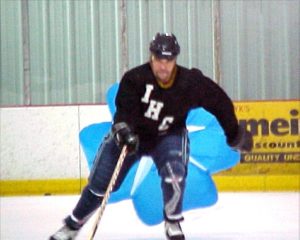
 The term ”Power Skating” has been misunderstood and overused in the hockey world for a long time. The term was invented many years ago by a figure skater who was teaching hockey players proper and efficient skating. She was looking for a name that would appeal to those hockey players and came up with the name “Power Skating”. However, “Power” is only one of many attributes of proper hockey skating. When the term Power Skating is used by most hockey instructors, it is meant to be proper hockey skating by combining speed, power, quickness, edge control, balance, upper body control and skating efficiency. I watch many youth hockey practices and the majority of the practices start out with skating. Usually the circle drill – where the players skate around every circle several times. When I ask the coaches and/or the parents of the players why they are doing these drills to begin their practice, the most common response I recieve is that they are doing their “Power Skating”. They are not really power skating though. They are skating for conditioning. If they were power skating, there would be instruction involved to show then the proper way to perform the techniques – to make them a more powerful, faster, quicker, and more efficient skater. Instead, what they are doing is tiring out the players before they even bring the pucks out to start teaching their practice objective. They are also tearing up the ice before the pucks come out for practice – which just isn’t a good strategy. Then the coach wonders why his players can’t make or receive a pas! The players are already tired out from skating in circles, and the ice is now choppy and covered with snow. Conditioning skating with some emphasis on proper skating is great at the end of practice – if you have time. But when the players first step on the ice, that is the best time you have to teach them. This is the time when the players’ attention span is at its greatest, their energy levels are at their highest, and the ice is at its best. To tire them out with skating drills that arent really improving their skating, at the beginning of a practice or training session – certainly seems to be very counter productive.
Power Skating -vs- Conditioning Skating

Leave a Comment